Composite
is not a dirty word.
The concept of composite images, especially ones created with Photoshop, is one that brings up strong opinions.
I am here to tell you “composite” is not a bad word. While we are on the topic, “Photoshop” is not a bad word either. A composite is simply a type of image, and Photoshop is a tool to bring art to life, much like a dark room, or a paintbrush.
When you learn that art is created through a composite of 2 or more images, it doesn’t automatically mean it is fake or unrealistic.
In my genre of astrophotography, it simply means I took the photos from different tripod positions.
I still used my photographic and editing skills to take the photos and create the images. It often takes a higher level of skill to put these images together to share my vision.
There are several reasons I will make composite images.
The night sky is not dark enough in the location of the foreground, due to light pollution.
The timing of my visit doesn’t line up with the position of the stars, due to it being the wrong time of day or year.
The position of the stars will never be right for the art I want to create, due to facing the wrong direction.
I personally always share when I create a composite image, but I also don’t think it is necessarily a requirement of an artist to be so transparent about their process.
Generally my final images are correct in terms of star position, but if I want to create a specific image I’m not afraid to break that rule. I believe people are artists and the point of art is to create and share beauty, to make the world a more pleasant place.
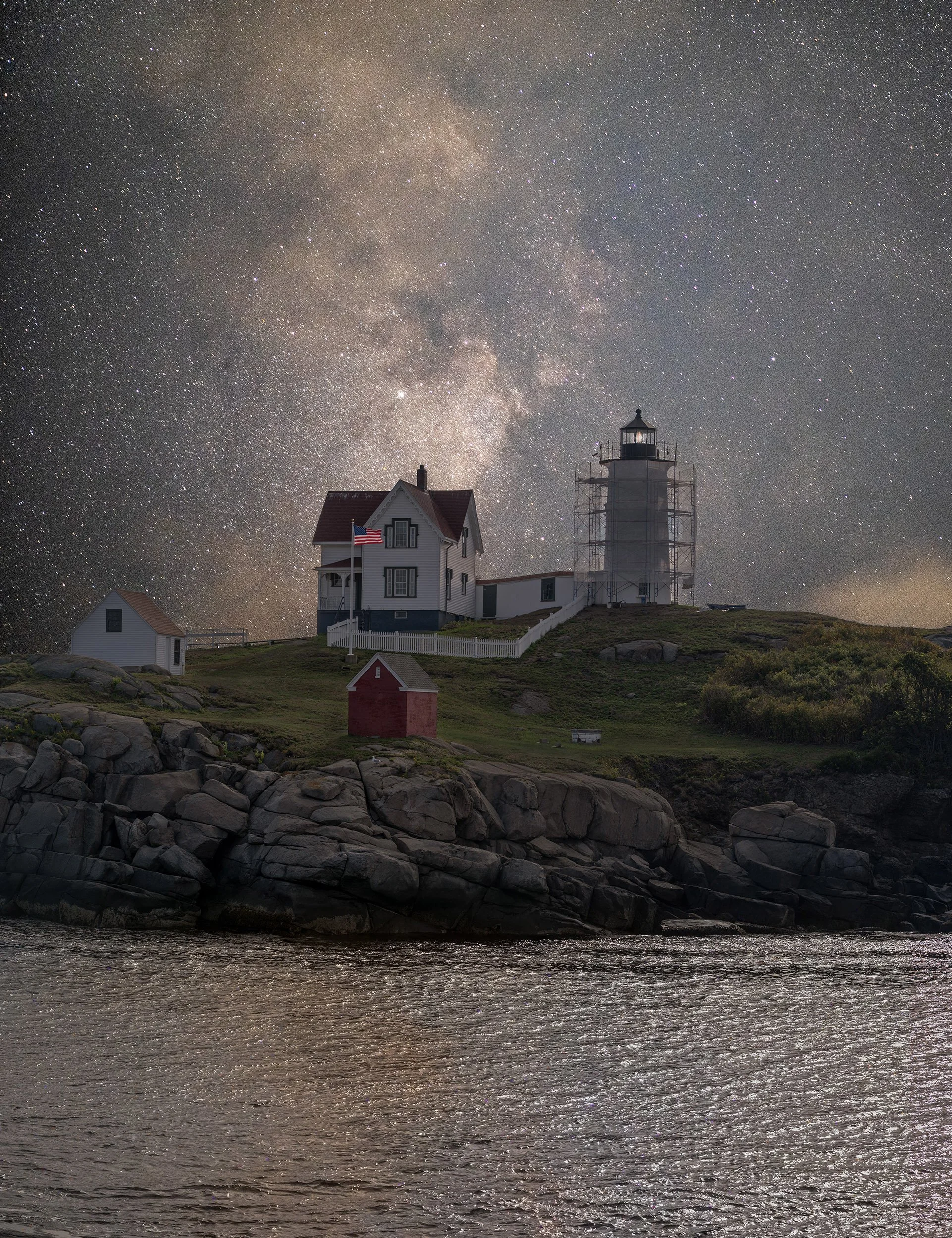
Now that we have all that understood, I would love to share my process for the composite image I shared at the top of this post.
This is Nubble Light.
A lighthouse in York, Maine.
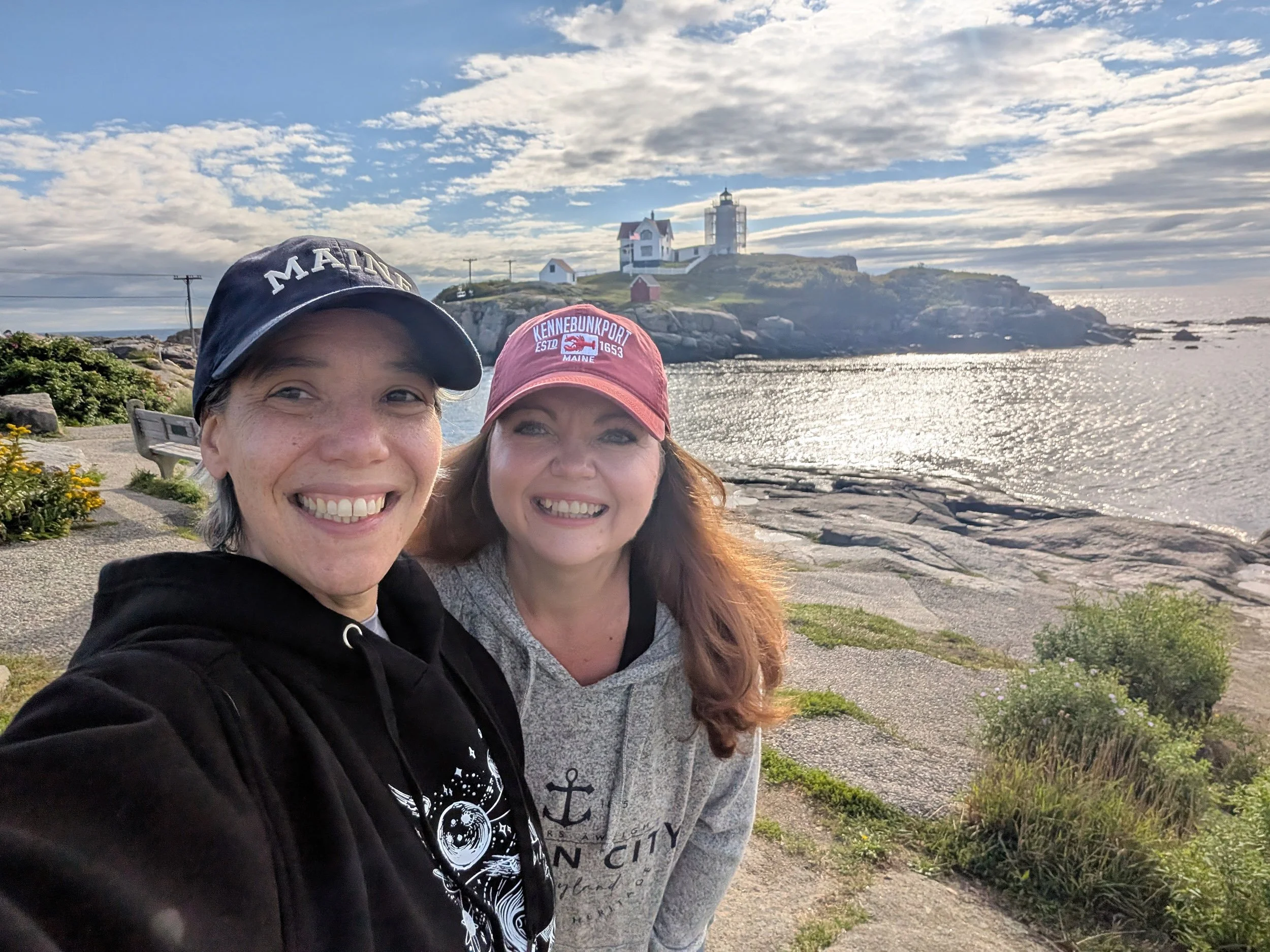
I spent a long weekend in Maine with my sister-in-law. We went to celebrate a big achievement of hers. We chose Maine because we had never been there before, and it seemed beautiful.
And it was beautiful. The food was fantastic, the people were nice, and the weather was perfect except for the clouds at night.
Our plan was to eat seafood, explore a small town, and see some lighthouses. My plan was to take some Milky Way photos on the coast.
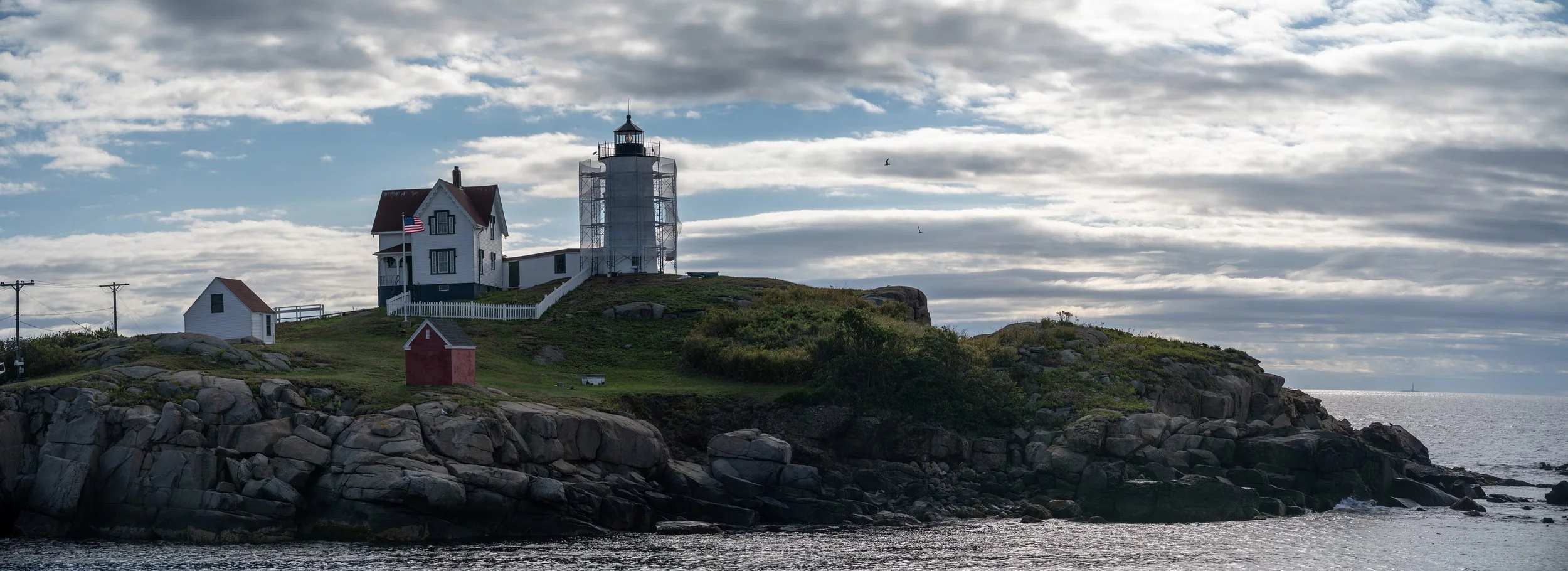
We had a little trouble finding lighthouses, but the Nubble made up for it all. There is construction happening on the lighthouse itself, but the scaffolding didn’t take away from the happiness we felt finally seeing one from nearby.
Every night we observed the sky to see if the stars would come out.
We live in Ohio, and the sky is much darker in Maine, so I was really hoping to enjoy some stargazing while we were there.
Each time the clouds would come in and cover every star.
On our last night, we arrived back at our hotel after dinner, and the stars were out! Luckily our room had a balcony, and it faced to the South (where the Milky Way core lives).
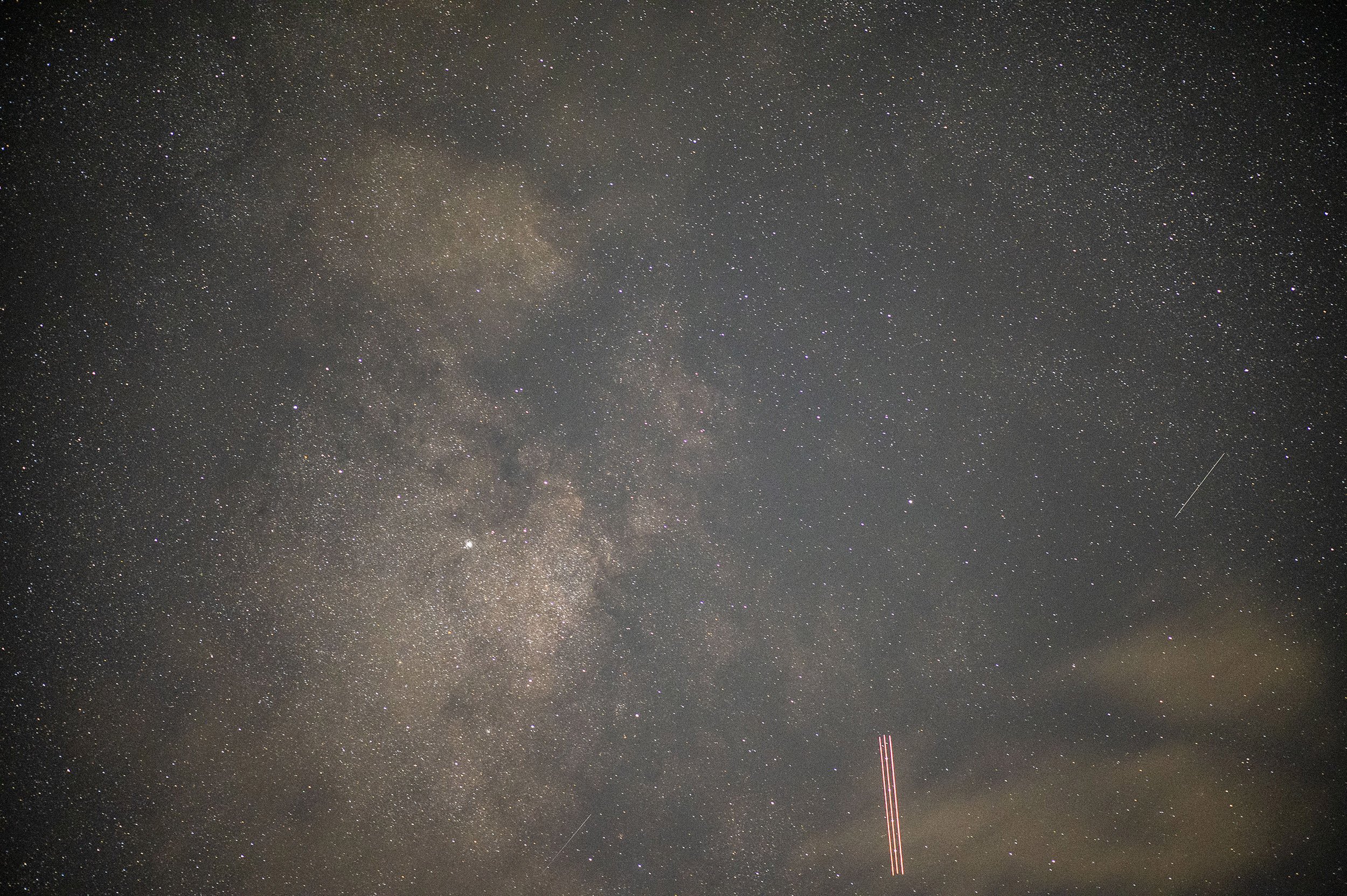
The stars stayed out for 10 glorious minutes and I captured the image below. The core is behind the trees behind the hotel, but I didn’t even care, there were so many stars!
After our few minutes of star therapy, the clouds rolled in quickly.
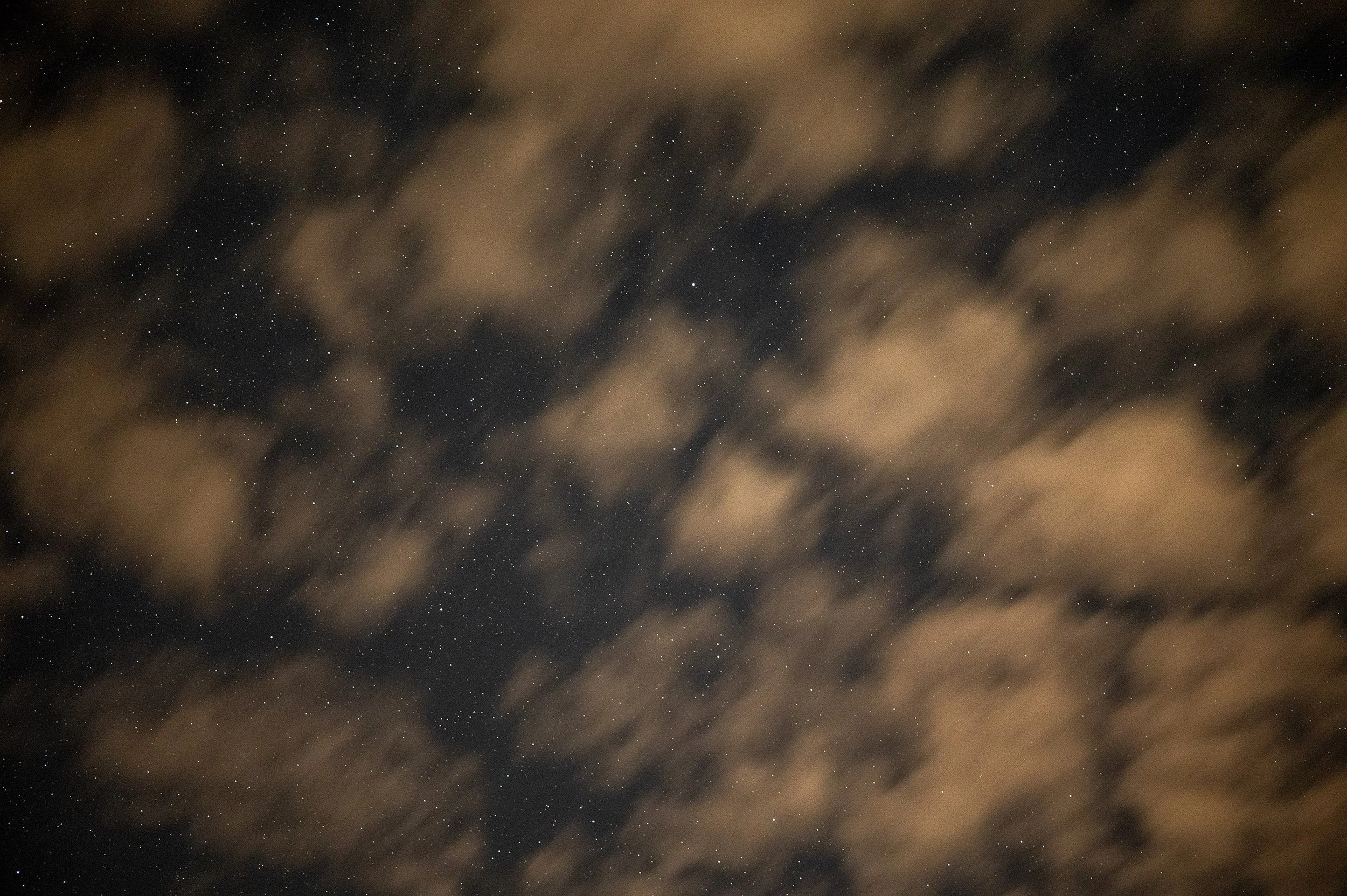
Since I was so lucky to get a few minutes of star time, I wasn’t going to waste it, I had to share the image I had planned to create the whole time.
I had only seen one lighthouse close enough to mean anything, and I had only had a very small fraction of one night when the stars came out.
The solution to my art problem was obvious. Create a composite of the scene I tried to see every night with the images I was actually able to capture.
The solution was simple, but the process of creating my final image was far from it.
Problem number 1 was that the Milky Way core wasn’t even in my image. The core is where the biggest concentration of stars is located. It is golden and brilliant, there are many colors and so much interest in this area of the night sky.
The Milky Way core, The Dark Horse Nebula, and Rho Ophiuchi are the main points of interest in most Milky Way photography. I was missing them all, but there were so many stars that I didn’t even care and I wanted to create my image anyway.
Problem number 2 was that I had seen the lighthouse in broad daylight. Matching the lighting on the foreground with the sky is one of the biggest goals in creating an image like this. We want it to feel believable. I had to make the lighthouse foreground look like a night photo.
Solution number 1 was to work with what I had. The important thing to me about this sky is that it is from the same area in Maine. The darkness of the sky is similar.
The position of the Milky Way would have been incorrect anyway, so even if I took the sky photo at the lighthouse location, I would have had to swing my camera over to capture the lighthouse. In essence, I would have created a composite anyway to line up the stars with the lighthouse foreground.
Solution number 2 was to make the lighthouse photo look more like it was taken at night.
The light was not illuminated, but given the construction I don’t know if it would have been on this night anyway, so that didn’t bother me.
Most notably the sun would not be creating such strong highlights and shadows. I worked to even out the lighting so it was more even throughout the scene.
Then the water would have different coloring. I brought colors from the sky into the water to show the effect of a reflection on the choppy water.
Finally, I decreased the light overall. Cameras can already see better than us at night, which is one of my favorite things about my art, but there is less light to see with in general so I took down the exposure to help it feel more like night.
I hope this insight helps you understand and appreciate art the way artists hope you will when they share their art with the public.
Thanks for reading and learning that a composite image doesn’t mean it’s fake, and it certainly doesn’t mean it was made with AI. On the contrary, it is an artist bringing their vision to life with their own human brain and skills.